






Why Do Some People Prefer Paying Higher Taxes for Universal Health Care Over Dealing With Insurance Companies?
A very personal topic in America
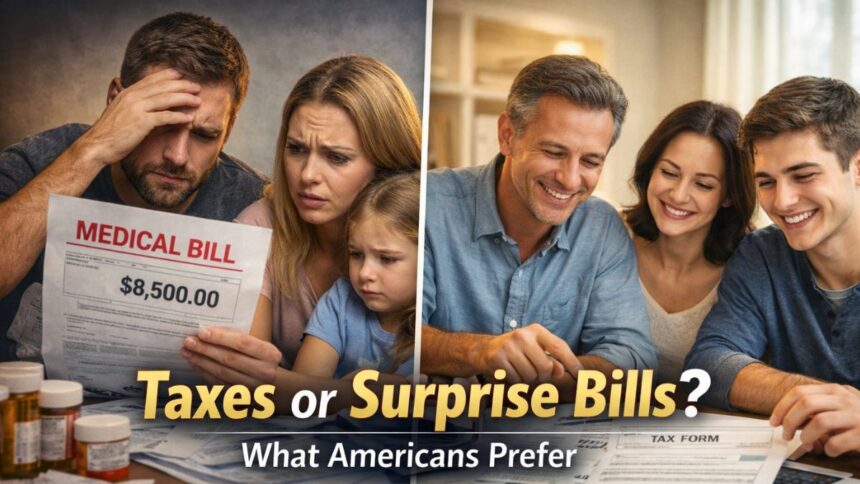
Health care in the United States is not just a political debate. For many families, it is a daily worry. People think about premiums, deductibles, networks, and surprise bills almost as much as rent or groceries. That is why a lot of Americans say they would rather pay higher taxes for universal health care instead of dealing with insurance companies.
This idea sounds strange at first. Nobody likes taxes. But when you listen to real stories, the opinion starts to make sense. For some people, higher taxes feel more predictable and less stressful than the current insurance system.
The problem people feel every month
Many Americans already pay a lot for health care, just not in taxes. They pay monthly premiums. They pay copays. They pay deductibles. They pay coinsurance. And sometimes they still get huge bills.
Imagine a family paying $650 every month for insurance. That is $7,800 per year. Now imagine they still must pay $3,000 before insurance starts helping. That means they already spent over $10,000 before real coverage kicks in. If someone ends up in the hospital, the bill can still be thousands more.
So when people hear “higher taxes,” they compare it to what they already spend. Some realize they are not choosing between free care and taxes. They are choosing between complicated payments and one simple payment.
Predictability matters more than price
One reason people support higher taxes for universal health care is certainty.
Insurance feels like a gamble. You never know what is covered. A doctor might be “in network” this year but not next year. A medication might be approved today but denied tomorrow. A hospital visit might cost $200 or $20,000 depending on coding.
Taxes, however, feel fixed. If you know you will pay 8% or 10% more in taxes, you can plan your life. You do not fear opening the mailbox. You do not avoid the doctor because you are scared of the bill.
Many people say peace of mind is worth money. Health care anxiety is real anxiety.
The paperwork frustration
People also dislike dealing with insurance companies because of paperwork. Calls, appeals, authorizations, forms, waiting times — these things exhaust patients.
Parents of sick children talk about spending hours on the phone every week. Elderly patients struggle to understand letters full of complicated terms. Even doctors hire entire departments just to communicate with insurance companies.
In a universal system, most of this disappears. You go to the doctor, show your card, and leave. The government handles payment behind the scenes. For many Americans, this simplicity is the biggest attraction.
Doctors often agree quietly
Interestingly, some doctors also support higher taxes for universal health care. They do not always say it loudly, but many feel burned out by insurance administration.
Doctors want to practice medicine. Instead, they argue about billing codes. They send justification letters for treatments they know patients need. Some even choose treatments based on approval likelihood rather than medical ideal.
When patients see doctors frustrated too, they start blaming the system rather than taxes.
Fear of bankruptcy drives opinion
Medical debt is one of the biggest reasons people prefer paying higher taxes for universal health care. In America, getting sick can financially destroy a family.
You can do everything right — work hard, have insurance — and still go bankrupt after cancer or an accident. This feels unfair to many people. Illness is not a choice.
In countries with universal systems, people still pay taxes, but they rarely lose homes due to hospital bills. For Americans, that tradeoff sounds reasonable.
The “already paying anyway” mindset
Supporters often say Americans already fund health care through taxes. Programs like Medicare, Medicaid, VA hospitals, and public clinics already exist. Then employers and individuals add private insurance on top.
So people feel they are paying twice — once in taxes and once in premiums. That leads to the question: why not combine it into one system?
For them, higher taxes for universal health care does not mean new payment. It means replacing confusing payments with one transparent one.
Employer insurance insecurity
Another hidden stress is job-based insurance. In the U.S., losing your job often means losing your doctor. That creates fear during layoffs, career changes, or entrepreneurship.
Some people stay in jobs they hate just to keep insurance. Economists call this “job lock.” Universal coverage removes that fear. People can start businesses, change careers, or retire early without risking medical access.
Freedom, in this case, becomes more valuable than lower taxes.
Not everyone agrees
Of course, many Americans oppose higher taxes for universal health care. They worry about wait times, government control, and lower innovation. Some prefer choice, even if complicated.
But the supporters are not asking for luxury. They are asking for stability. Their argument is simple: health care should feel like a utility, not a gamble.
A cultural shift
For decades, Americans accepted insurance complexity as normal. Now younger generations question it. They compare experiences online. They see friends in other countries visiting doctors without fear.
The debate is not only economic anymore. It is emotional. People want health care to feel safe.
In the end, the preference for higher taxes is not about loving government. It is about avoiding uncertainty. Many Americans are tired of guessing the price of being sick.
Also Read: Most Stupid Thing People Do on Retirement (Big Mistake)
FAQ About Higher Taxes for Universal Health Care vs Insurance Companies
Q1: Why do people support higher taxes for universal health care vs insurance companies?
Many people support higher taxes for universal health care vs insurance companies because they want predictable costs instead of surprise bills and denied claims.
Q2: Is higher taxes for universal health care vs insurance companies actually cheaper?
For some families, higher taxes for universal health care vs insurance companies could cost less than premiums, deductibles, and copays combined.
Q3: Does higher taxes for universal health care vs insurance companies remove medical debt?
Supporters believe higher taxes for universal health care vs insurance companies greatly reduces the risk of bankruptcy after illness.
Q4: Why do workers prefer higher taxes for universal health care vs insurance companies?
Workers like higher taxes for universal health care vs insurance companies because they do not lose coverage when changing jobs.
Q5: Are doctors happier under higher taxes for universal health care vs insurance companies?
Many doctors say higher taxes for universal health care vs insurance companies reduces paperwork and insurance disputes.
Q6: Does higher taxes for universal health care vs insurance companies mean free health care?
No, higher taxes for universal health care vs insurance companies means prepaid health care through taxes instead of private bills.
Q7: Is higher taxes for universal health care vs insurance companies safer financially?
Families often feel higher taxes for universal health care vs insurance companies gives protection from huge unexpected hospital costs.
Q8: Why do young adults like higher taxes for universal health care vs insurance companies?
Young adults support higher taxes for universal health care vs insurance companies because they want stability while changing careers.
Q9: Does higher taxes for universal health care vs insurance companies reduce stress?
Many people say higher taxes for universal health care vs insurance companies lowers anxiety about getting sick.
Q10: Is higher taxes for universal health care vs insurance companies about politics?
For most supporters, higher taxes for universal health care vs insurance companies is more about security than politics.
Q11: Will seniors benefit from higher taxes for universal health care vs insurance companies?
Seniors often support higher taxes for universal health care vs insurance companies because it simplifies coverage and billing.
Q12: Why is higher taxes for universal health care vs insurance companies becoming popular?
The idea of higher taxes for universal health care vs insurance companies is growing because people want simple, reliable care instead of complicated insurance rules.