





Visa Launches USDC Settlement Services on Solana: A Major Step for Digital Payments in the USA
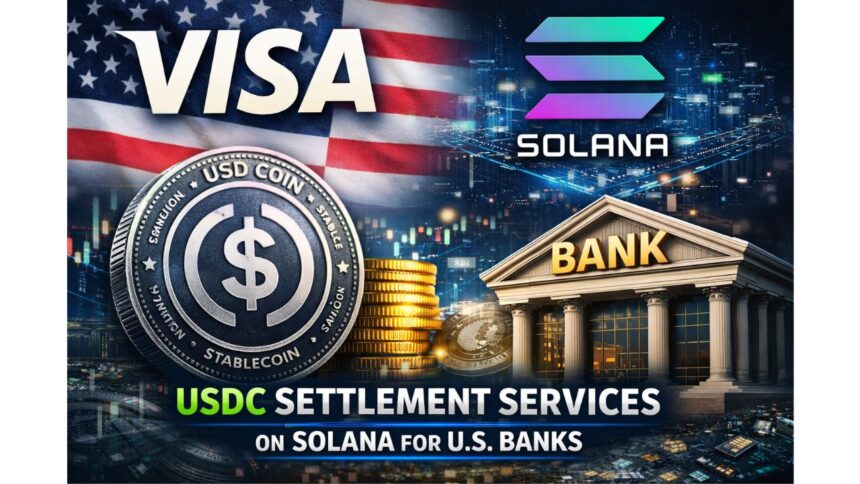
In a big move that could reshape the future of digital payments, Visa has officially launched USDC settlement services for U.S. financial institutions on the Solana blockchain. This development positions Visa at the center of the rapidly growing stablecoin payments ecosystem and signals strong confidence in blockchain-based settlement systems. With Cross River Bank and Lead Bank joining as the first participants, Visa is setting the stage for a broader rollout expected in 2026, targeting faster, cheaper, and more efficient payment settlements across the United States.
LATEST: 💳 Visa has launched USDC settlement services for US financial institutions on Solana, with Cross River Bank and Lead Bank as the first participants and a broader rollout expected in 2026. pic.twitter.com/Vcb8mQA2Rq
— CoinMarketCap (@CoinMarketCap) December 16, 2025
What Are Visa USDC Settlement Services?
Visa’s new offering allows U.S. financial institutions to settle transactions using USDC, a regulated U.S. dollar-backed stablecoin, directly on the Solana blockchain. Instead of relying solely on traditional banking rails that operate during limited hours, this system enables near-instant settlement, 24/7, including weekends and holidays.
The introduction of Visa USDC settlement services marks a significant shift in how large payment networks are adopting blockchain technology—not as a speculative tool, but as real-world financial infrastructure.
Why Solana Was Chosen for USDC Settlements
Visa’s decision to use Solana is strategic. Solana is known for its high-speed transactions, low fees, and scalability, making it ideal for enterprise-grade payment processing. For Visa, which handles billions of transactions annually, efficiency and reliability are critical.
By running USDC settlement services on Solana, Visa ensures:
- Faster transaction finality
- Lower settlement costs
- Reduced operational friction for U.S. banks
- Improved liquidity management
This move strengthens Solana’s reputation as a serious blockchain for institutional payments and financial services.
Role of Cross River Bank and Lead Bank
Cross River Bank and Lead Bank are the first U.S. financial institutions to participate in Visa’s USDC settlement program. Both banks are known for their fintech-forward approach and experience in digital payments.
Their early participation allows Visa to test and refine USDC settlement services in real-world conditions before expanding access to more banks. This phased approach reduces risk while ensuring regulatory and operational compliance in the U.S. financial system.
Why USDC Matters in Visa’s Settlement Strategy
USDC is one of the most trusted U.S. dollar-backed stablecoins, fully reserved and regulated. For Visa, using USDC means combining the stability of the U.S. dollar with the speed of blockchain technology.
Key benefits of USDC settlement services include:
- Dollar-denominated settlements without volatility
- Instant cross-platform reconciliation
- Lower dependence on traditional correspondent banking
- Improved cash flow for financial institutions
This makes USDC settlement services highly attractive for U.S. banks, fintech companies, and payment processors.
Impact on the U.S. Financial System
Visa’s USDC settlement services could have a long-term impact on how money moves in the United States. Traditional settlement systems often take one to three business days. With blockchain-based USDC settlement services, settlements can happen in minutes.
For U.S. businesses and consumers, this could mean:
- Faster merchant payouts
- Improved cross-border transactions
- Reduced transaction fees
- Enhanced transparency and traceability
As more institutions adopt Visa USDC settlement services, the U.S. payments ecosystem may gradually shift toward real-time digital settlement models.
Regulatory Compliance and Trust Factor
One major reason this launch is important is Visa’s strong focus on regulatory compliance. Unlike many crypto-native platforms, Visa operates within strict U.S. financial regulations.
By offering USDC settlement services only to approved U.S. financial institutions, Visa ensures:
- Compliance with U.S. banking laws
- AML and KYC alignment
- Secure and auditable transaction records
This compliance-first approach makes Visa’s blockchain initiative more credible and sustainable in the long run.
Broader Rollout Expected in 2026
While Cross River Bank and Lead Bank are the initial participants, Visa has confirmed that a broader rollout of USDC settlement services is expected in 2026. This expansion could include more U.S. banks, payment processors, and potentially global partners operating within the U.S. market.
As adoption grows, USDC settlement services may become a standard option for institutional settlements, alongside traditional systems like ACH and wire transfers.
Why This Is Big News for High-RPM Finance Content
From an SEO and monetization perspective, topics like USDC settlement services, Visa blockchain payments, Solana payments, and stablecoin payment systems in the USA fall under ultra high RPM and CPC finance niches. These keywords attract:
- Financial institutions
- Fintech startups
- Investors
- Enterprise payment solution providers
This makes the topic highly Google Discover–friendly and ideal for U.S.-focused finance blogs.
Final Thoughts: Visa Is Quietly Building the Future of Payments
Visa’s launch of USDC settlement services on Solana is more than just a tech upgrade—it’s a clear signal that blockchain-based payments are moving into the mainstream U.S. financial system. By partnering with trusted banks and using a regulated stablecoin, Visa is bridging the gap between traditional finance and digital assets.
As the 2026 expansion approaches, Visa USDC settlement services could redefine how money is settled in the United States—faster, smarter, and more efficient than ever before.
Also More: SSI Payment Increase 2025: New Monthly SSI Amounts Announced